S1E9: Theater as Witness: Weighting the Wait from Open Theater Project
January, and the launch of Scene in Boston, feels like a long time ago now. In this city, real spring arrives suddenly — dawn birdsong, afternoon heat, baseball and soccer games, and dinner reservations on patios all while the winter coats are still hanging in the hallway. I mention this because I first had the play we’re covering today on my radar in those dark days of early January but when I saw it last weekend I knew it was a play that belongs in the springtime with all the aliveness that that signifies.
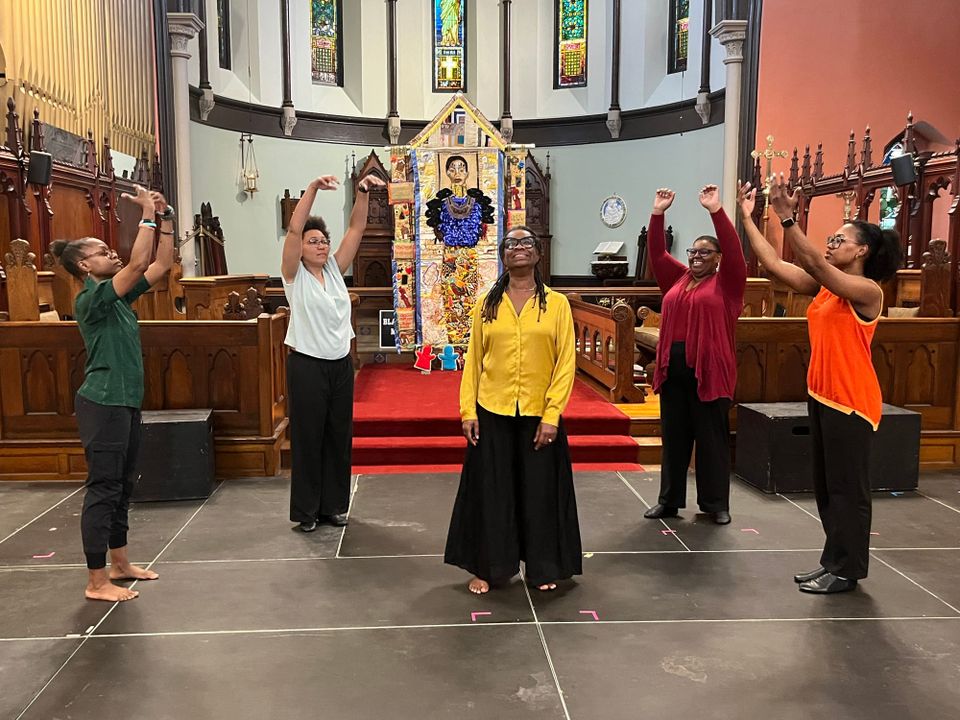
Playing in a church in Jamaica Plain (St. John’s), Weighting the Wait is a community-built performance created from writing circles with mothers impacted by gun violence. Director Dev Luthra describes the project as an effort to connect with “communities whose stories are unheard, not untold, but unheard.”
It closes on Saturday, so if you’re in Boston you have a few days to check this out. And you should. Because it is a show that begins in darkness and ends with the joy of gathering together... much like Boston right now.
From the beginning, the idea of a play born out of the stories lived in my community was compelling, but I also knew to be wary. I'm a longtime journalist with a previous career covering homicides, and I know how hard it can be to get these stories right.
Earlier in the season, Girl Crime helped me think this through a little more. This was a play that examined the commodification of trauma through the lens of true-crime podcasting. It showed me just how fine the line is between earnestness and commodification. It was line I knew Weighting the Wait would have to walk.
And it– carefully– does.
What makes the production work is that it does not treat the lived experiences it draws on as raw material to be mined. The writing process itself — structured through community writing circles, prompts, chants, and reflections — remains visible inside the finished piece. You can feel the collective authorship. This is important, because collective authorship hints at the production's core value of community. It ends powerfully with the audience joining the actors to declare that the stories shared belong to all of us. Collective authorship, we learn, is shared with us, too.
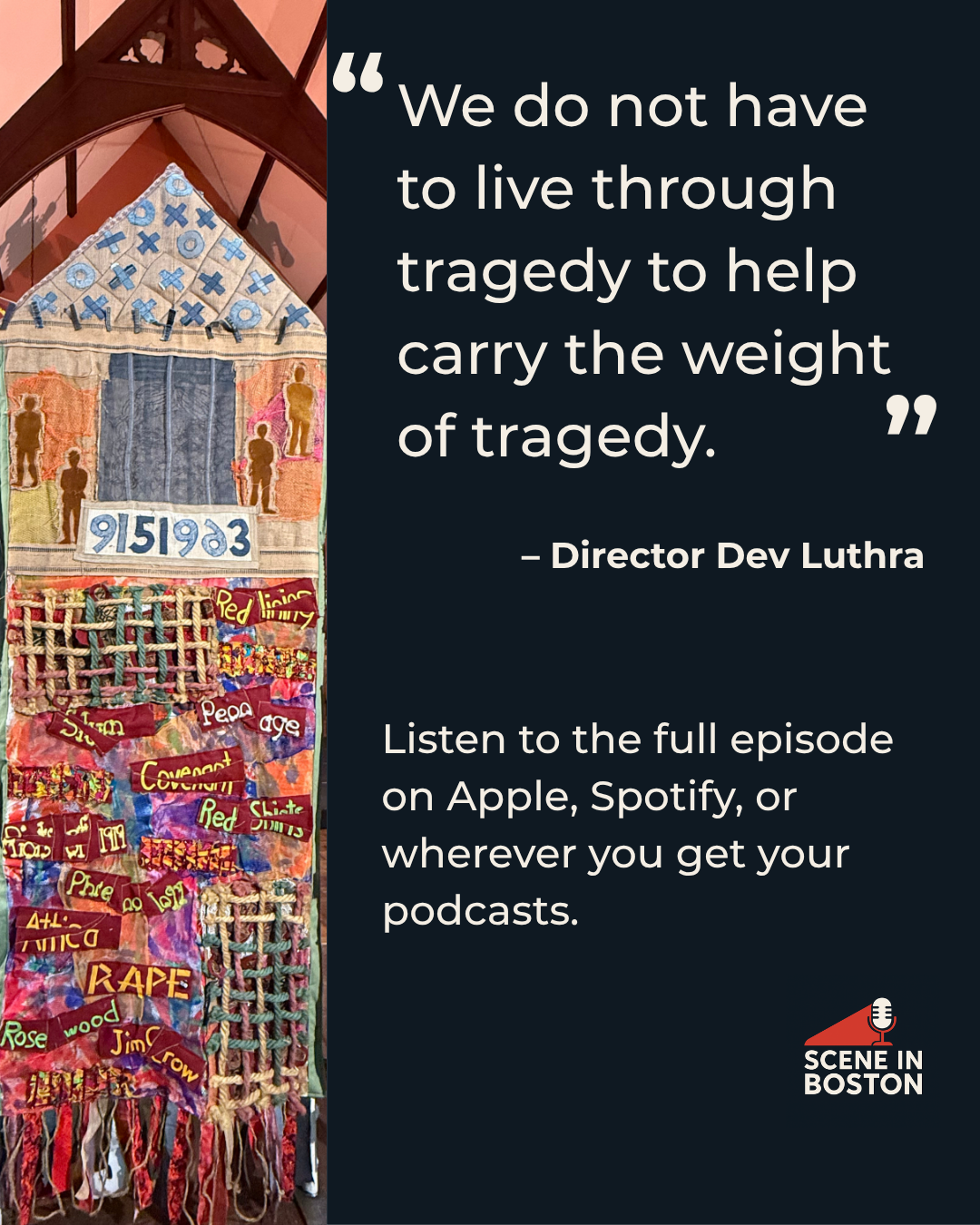
That sense of shared creation is echoed visually (and critically) by Rosalyn Elder’s monumental textile installation The Requiem Project, which surrounds the sanctuary with the embroidered names of young victims of racial violence and state violence hang beside towering fabric figures inspired by the Birmingham Six. Created by more than 150 community members, the work transforms the room, placing everyone gathered beneath the watch of towering figures that feel at once protective, grieving, and unyielding.
The play’s producers do give you time to walk the stage and examine these artworks up close and you should. They are singularly arresting in not just their detail, but their meaning. They work extremely well in the sanctuary of the church, thematically but also texturally in shape and color.
A note about the church: It is relevant to the storytelling that Weighting the Wait is performed in a sanctuary, a holy space for community, because the production treats gathering itself as part of the work.
The audience sits close to a thrust stage while performers move into and through the small crowd. In the final scene, participation (physical and vocal) is invited, a request that inside of this sanctuary feels like communion.
Not every participatory moment landed equally for me. But I appreciated the production’s willingness to risk earnestness in pursuit of connection, particularly when I consider Girl Crime, which also asked audiences to think about violence not as spectacle, but as something lived, witnessed, and carried by communities.
There’s a line from my interview with Dev in this week’s episode that I haven’t been able to shake: “We do not have to live through tragedy to help carry the weight of tragedy.” And in different ways, that’s what so much on stage this season in Boston has been about: how communities carry stories, grief, memory, and survival together.
Maybe that’s why it feels right to encounter this production now, at the edge of summer instead of deep winter. In January, I think this work would have felt almost unbearably heavy to me. But in spring, with everything opening back up again, its insistence on connection and shared burden feels less like despair and more like possibility.
I have one more episode left for you this season, where Lisa and I will look back on the productions we loved most, what surprised us, and what we’re excited to see next in Boston theater.
In the meantime, listen to — and subscribe to, and like — our episode on Weighting the Wait. You can find it wherever you get your podcasts or, if you’re reading this in a browser, in the player below.
Member discussion