See these two plays together.
Boston’s fall theater season is here.
I felt it Sunday afternoon, walking out of Lyric Stage after All My Sons into the cool, damp September air, with Purpose—which I’d seen at the Huntington two nights earlier—still rattling around in my head. In the coolness, we all gathered our jackets around us, headed for the train or the parking garage or an early dinner. I’m never quite ready to let summer go, but there it was: fall, and a new theater season, unmistakably underway.
The school year is underway, too, which means Scene in Boston is back at Boston Arts Academy. On Thursday, our team gathered in the studio to record the first episode of Season 2. The juniors we worked with last year are seniors now, and a new group of juniors is learning the ropes of audio production and arts journalism. We’ll have that first episode out to you shortly. It felt very good to be back.
But before that lands in your podcast feed, let's come back to All My Sons and Purpose. Because right now Boston audiences have a rare opportunity to see two plays, written nearly 80 years apart, asking remarkably similar questions about family, inheritance, and the things we keep from one another.
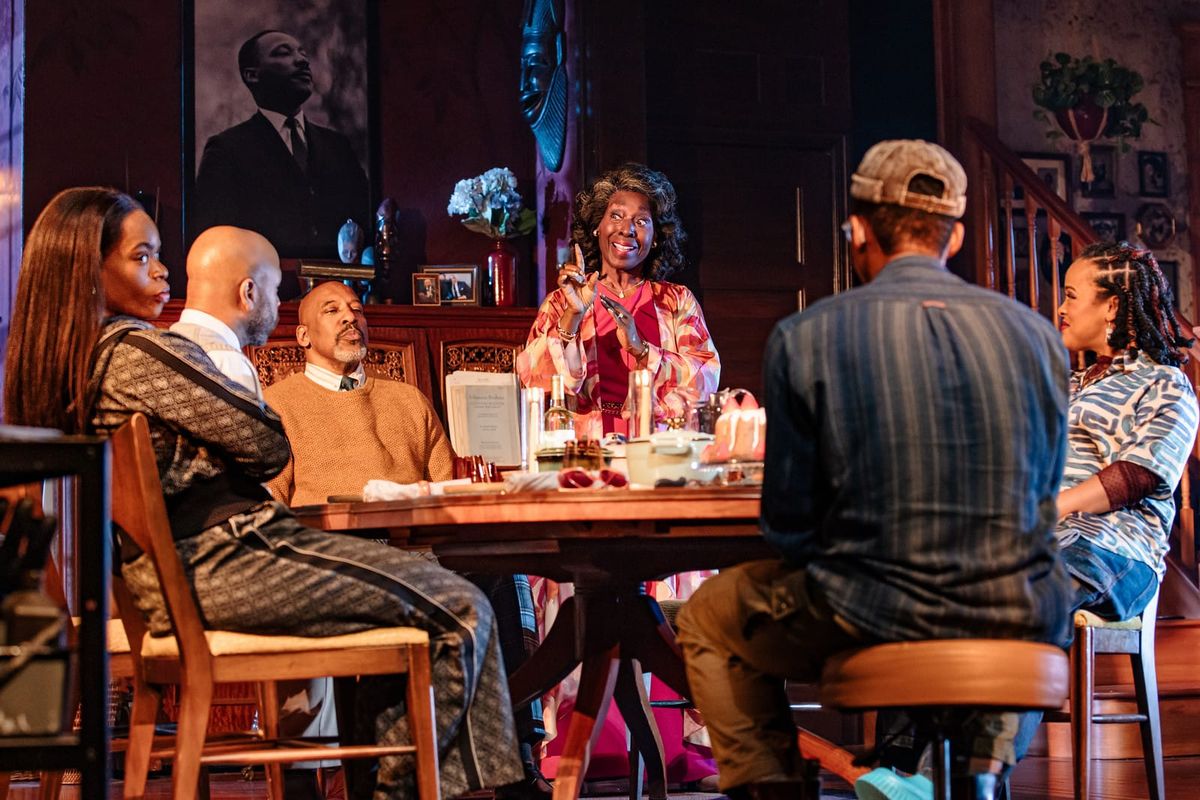
Branden Jacobs-Jenkins’ Purpose at the Huntington and Arthur Miller’s All My Sons at Lyric Stage are two American family dramas. They tell very different stories about very different families. But seeing them in the same weekend, I couldn’t stop noticing the ways they spoke to each other... and seeing them together makes each one more interesting.
Both are interested in inheritance: what parents believe they are giving their children, what they actually pass down, and what happens when the next generation has to decide what to do with it.
Both are interested in the things families don’t say.
And both have exceptional ensembles bringing all of that love, resentment, loyalty, disappointment and history onto the stage.
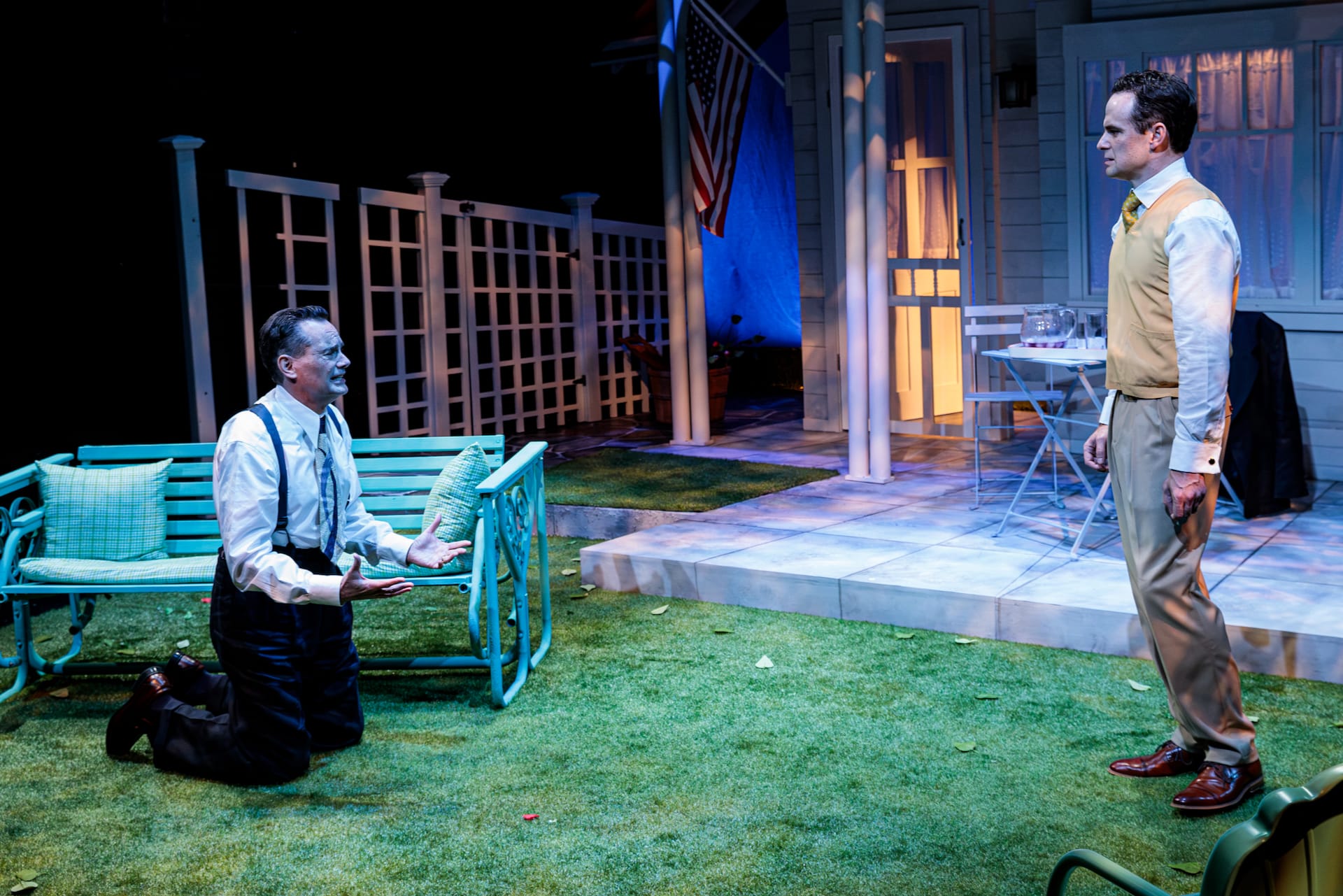
In each play, the families have carefully maintained stories about themselves. Both have fathers who have built something they expect their sons to inherit. Joe Keller has built a successful business and a comfortable life for his family. Solomon Jasper has built a legacy through the Civil Rights Movement and the church. Their sons have to reckon not just with what their fathers built, but with what comes attached to that inheritance.
The sets of both productions use their spaces incredibly well, allowing actors and audiences access to another layer of storytelling—from the snow falling softly outside the windows of the Jaspers’ living room to the fractured and fragmented version of the Kellers’ idealized home.
Look more closely at those spaces and another parallel emerges. All My Sons takes place outside, on the Kellers’ back porch and in their yard. Neighbors wander through. The family is living in view of the community around them while desperately trying to keep what happened inside the family from getting out. Purpose, on the other hand, takes us inside, into the Jaspers’ living room. And over the course of a family gathering, the things this prominent family has worked so hard to contain start coming out.
Without that contrast, I’m not sure I would have noticed how neatly the spaces reflect what each play is doing: The Kellers are trying to keep their secrets in. The Jaspers are letting theirs out. Within this, both plays ask the same uncomfortable question: What does it actually mean to protect your family?
But neither play is simply about secrets. They’re about the systems families build around the things they don’t say—who knows what, who protects whom, and what happens when keeping something inside begins to cause more damage than letting it out. (And as a side note, each of the dramas is rocked initially by the arrival of a young woman interloping on the family. Ann, in All My Sons and Aziza in Purpose. Neither creates the tensions she encounters, but her arrival upsets the careful equilibrium that has allowed the family to live with them.)
There’s one more parallel—perhaps the one that has stayed with me most—that I can’t tell you about without spoiling both plays.
What I can say is this: When these families finally reach the point where what has been hidden can no longer stay hidden, Miller and Jacobs-Jenkins make very different choices about what happens next. Nearly 80 years separate those choices, and the difference between them has been rattling around in my head ever since.
That’s the pleasure of seeing these two plays together. You get to watch two playwrights, generations apart, take up some of the same big questions—about family and loyalty, inheritance and responsibility, what we owe one another and what happens when love and protection become tangled up with harm—and then take those questions in different directions.
So, if you can, make this one a double feature. We don’t often get the chance to see two plays like these, in two excellent productions, in conversation with each other on Boston stages at exactly the same moment.
Want to know what else is onstage?
Purpose and All My Sons are just two of the shows filling Greater Boston stages this season.
We’ve been working all summer on the Scene in Boston 2026–27 Season Guide: a guide to what’s onstage, what each show is about, and some of the connections that can help you decide what you want to see.
Below, you’ll find our guide listings for Purpose and All My Sons as a little preview. You can pre-order your copy, with the full 2026/27 now here.


Comments ()